Made in Europe, buy from Europe.
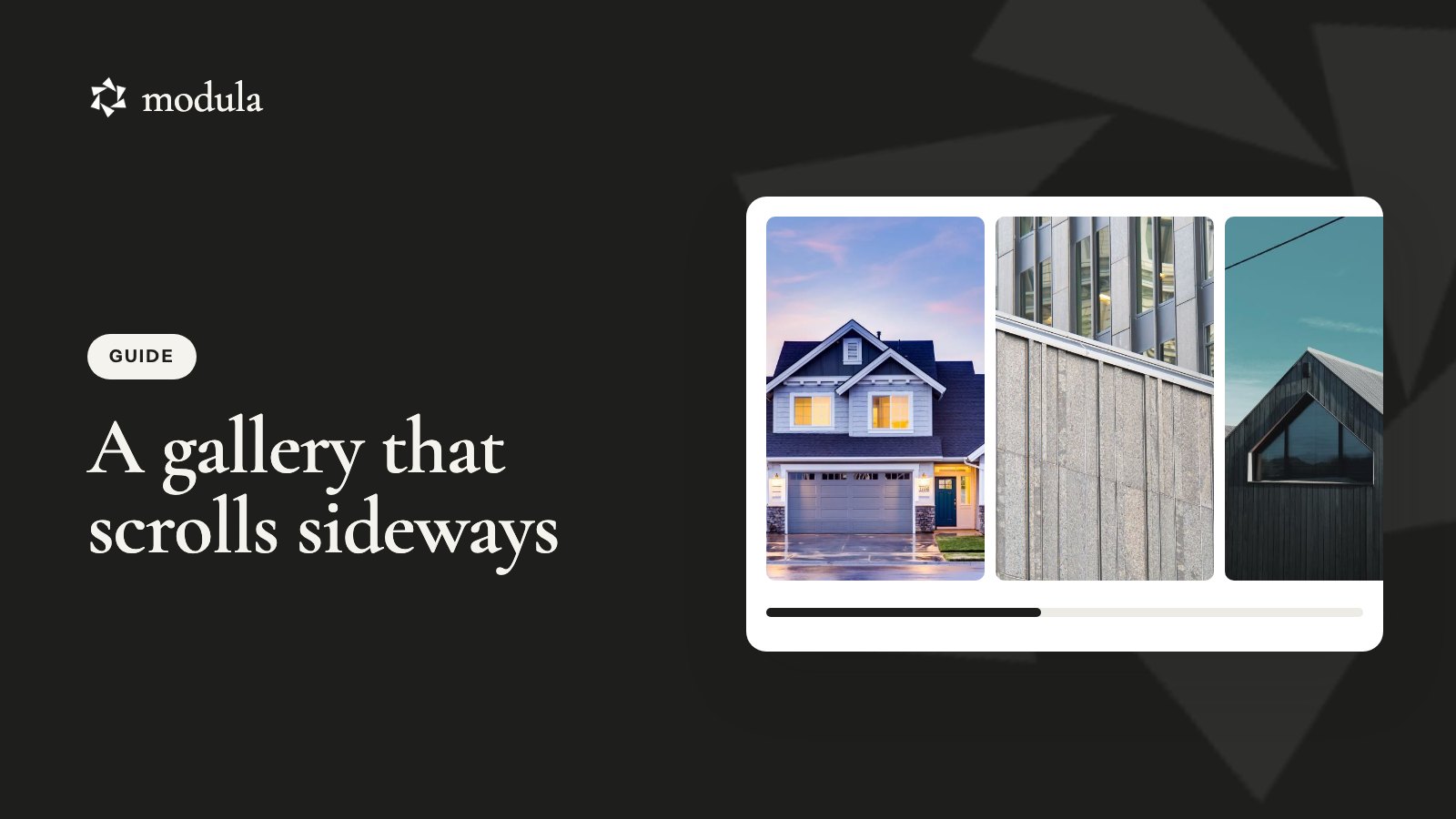
A scrolling gallery lets visitors move through your photos by swiping, dragging or scrolling, instead of clicking from page to page. It can run sideways like a strip of film, keep loading as people scroll down, or fill the screen one photo at a time.
WordPress’s Gallery block only makes a grid, so for a gallery that slides or keeps loading you need a plugin. We make Modula, and it’s the one this guide uses. The short version:
- Sideways: set the gallery’s Type to Slider or Showcase.
- Downward: pick a grid such as Masonry and switch on Pagination with Infinite scroll.
- Full screen: pick Story, for photos that play like Instagram stories.
What is a scrolling gallery?
A scrolling gallery is a set of photos that visitors move through with a swipe, a drag, the mouse wheel or the arrow keys.
They see a few photos at a time and scroll to reveal the rest, so dozens of photos fit in one spot on the page.
A scrolling photo gallery earns its place when you have more photos than fit on one screen. A potter with 12 product shots can show three mugs at a time instead of a grid four screens long.
A wedding photographer with 300 photos can show the first 24 and let the rest load as guests keep scrolling.
It feels natural on phones, too, and that’s where most visitors are: mobile is 58.99% of web traffic worldwide, against 39.26% for desktop (StatCounter, September 2026).
A plain grid is better when people need to compare. A client choosing between three nearly identical portraits wants all three side by side, not one at a time.
Scrolling gallery examples
A scrolling image gallery can move sideways, grow downward or fill the screen. These five examples cover all three.
A slider with the next photo peeking in
One big photo at a time, with its neighbors’ edges showing at the sides. Visitors swipe, drag or click the arrows. It suits a portfolio homepage or a product page. Try our demo slider.
Video: moving through a Modula slider with the arrows, the thumbnails and a drag.
Type: Slider. Plan: Trio and up.
A Showcase with a bigger center photo
A row of photos where the middle one is larger, and each next photo grows as it slides into the center. It’s made for featured projects or your ten best shots of the year.
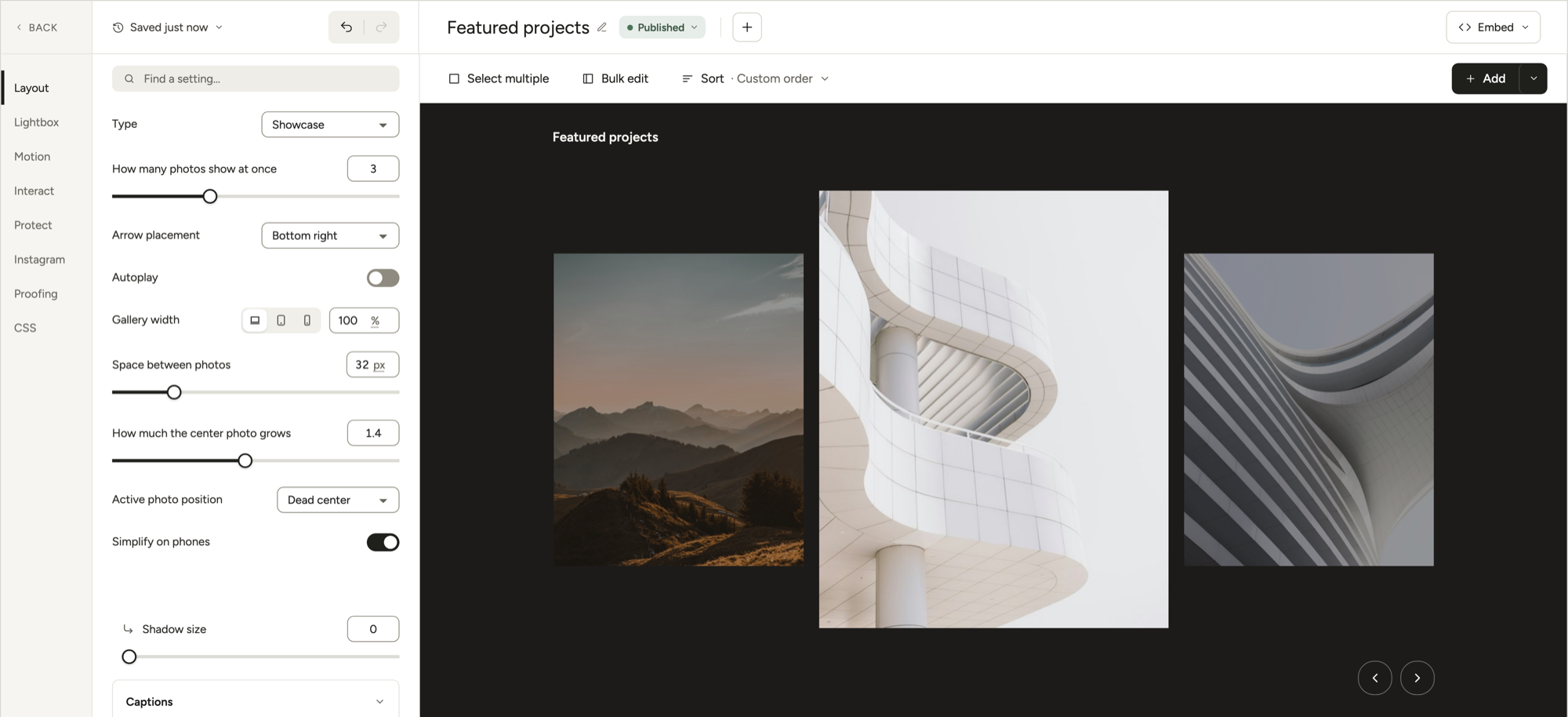
Type: Showcase. Plan: Modula Pro, any plan.
A Masonry grid that keeps loading
Photos of different heights stack in columns, and the next batch appears when visitors reach the bottom. It’s built for big sets: a wedding, a festival, a year of client sessions. More on masonry galleries.

Type: Masonry with Infinite scroll. Plan: Business.
A Parallax wall with depth
A masonry wall whose columns drift at different speeds as you scroll, so the page feels layered. It suits architecture, travel and fine-art portfolios.

Type: Parallax. Plan: Modula Pro, any plan.
A full-screen Story
One photo fills the screen, with progress bars across the top, and visitors tap to move on, as in Instagram stories. It’s made for phones: a trip told day by day, say.
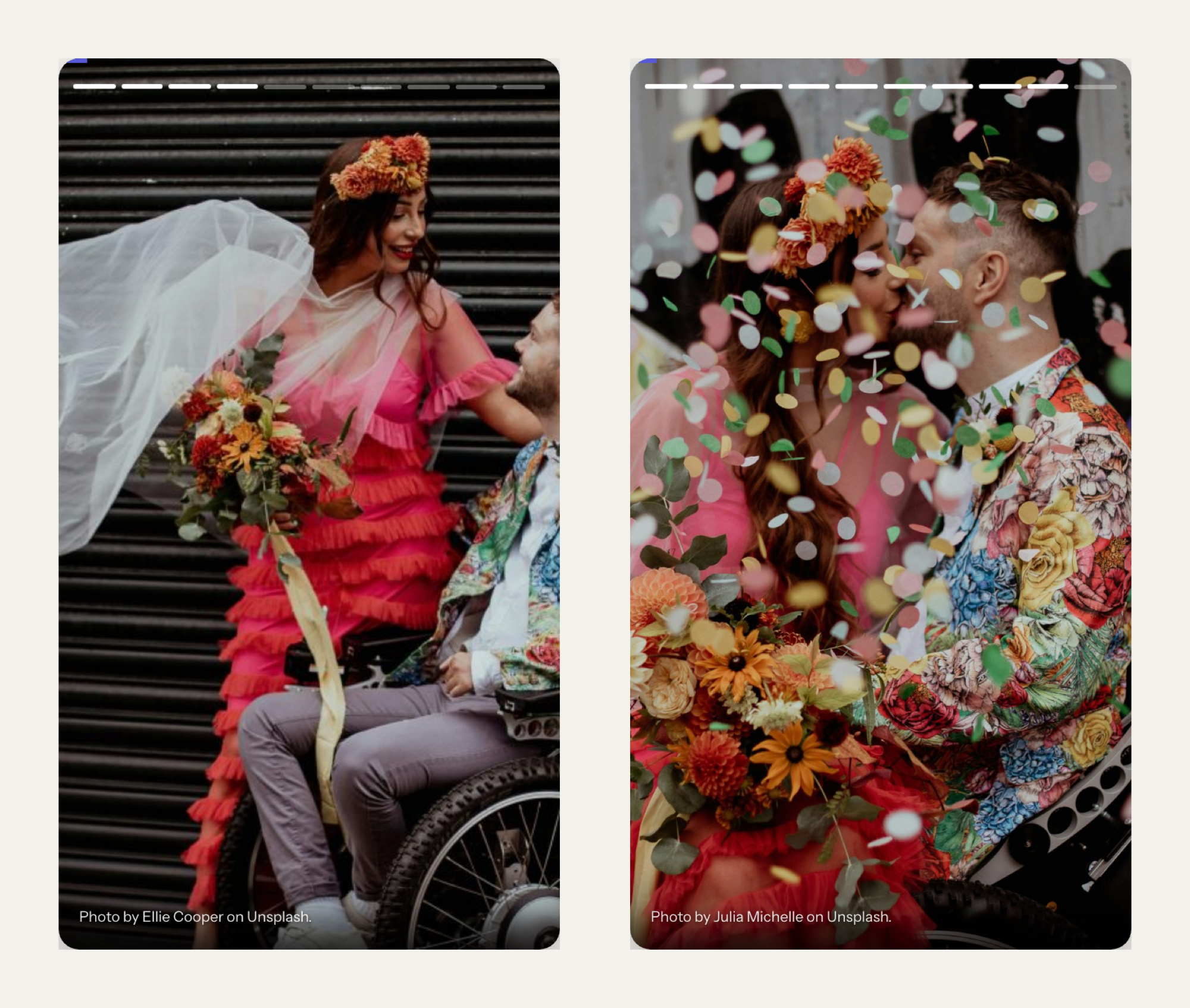
Type: Story. Plan: Modula Pro, any plan.
Before you start
If Modula isn’t on your site yet, go to Plugins → Add Plugin, search for “Modula”, click Install Now and then Activate (step by step).
The free version has 160,000+ active installations and 8 of Modula’s 16 gallery types. For the rest, add your Modula Pro license.
Features that come as extensions, such as Slider and Pagination, also need their switch turned on in Modula → Extensions (how to turn on extensions).
Then go to Modula → Content, click New gallery and use + Add to pick photos from your Media library, or its arrow → Upload files. They keep the order you add them; drag-and-drop Sort comes with Modula Pro.
When you’re done, click Save in the top bar (or press Cmd/Ctrl+S).
| What you want | What it needs |
|---|---|
| Swipe or wheel through photos in the lightbox | Free |
| Images that load as people scroll | Free, on by default |
| A simple reveal as photos scroll in | Free |
| Showcase, Parallax or Story | Modula Pro, any plan |
| Lightbox slideshow or thumbnail strip | Modula Pro, any plan |
| Slider | Trio plan and up |
| Image compression and image CDN | Trio or Business |
| Pagination, Infinite scroll, Load more | Business |
Modula Pro starts at $39 for the first year ($78/year after); pricing has the full comparison.
How to make a horizontal scroll gallery
A horizontal scrolling gallery moves sideways, one photo or a short row at a time. In Modula, you build one with the Slider or Showcase type; there’s no sideways masonry strip.
With the Slider type
Open Layout in the left rail and set Type to Slider. Then shape how it moves:
- Visible at once: 1 for one big photo, 3 or 4 for a filmstrip row, with separate numbers for tablets and phones.
- Peek side slides: when one photo is on screen, the edges of its neighbors show at the sides (50 px by default), the clearest hint that there’s more.
- Drag to move: lets mouse users drag the row the way phone users swipe it. On by default, like Loop endlessly.
- Show arrows, Show page dots, Show thumbnails: the ways to move by clicking.
- How fast slides change: 150 to 350 ms, 300 by default, so even the slowest setting feels quick.
For the potter’s 12 mugs: 3 at once on desktop, with Advance by (how many photos each click moves) set to 3, so four views cover the whole shelf.
On phones, show 1 at a time with Peek side slides on, so the next mug peeks in.
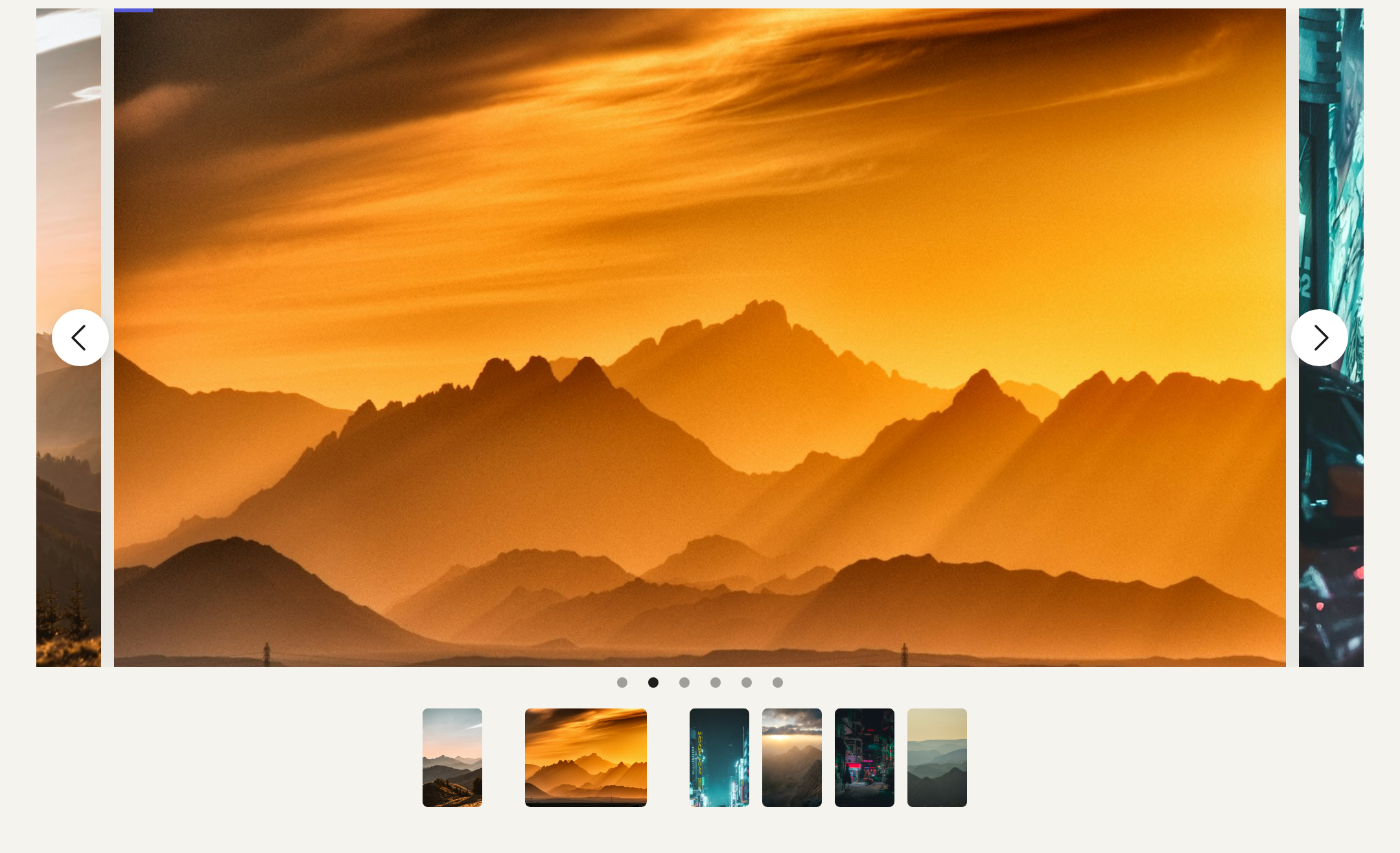
Our image carousel guide covers every other slider setting, and our video slider guide shows how to add videos.
With the Showcase type
Set Type to Showcase, then adjust:
- How many photos show at once: 2 to 5, 3 by default.
- How much the center photo grows: 1.1× to 1.75×, 1.4× by default.
- Arrow placement: bottom right (the default), bottom left, or the left and right sides.
- Simplify on phones: on by default, so phones show one photo with the next peeking in.
One difference from the Slider: click a photo in a Showcase and it opens in the lightbox, the full-screen photo viewer.
Make it scroll on its own
Want an auto scroll gallery? Turn on Autoplay. On a Slider, set Time between slides (1 to 15 seconds, 3 by default) and switch on Pause when hovering. On a Showcase, set the Autoplay interval (1.5 to 15 seconds, 4 by default).
One honest limit: Modula has no nonstop marquee, a strip that glides past without stopping. Autoplay moves one step, waits at least a second, then moves again.
The closest you’ll get is a Slider showing 3 or 4 photos, with Loop endlessly on and a short Time between slides.
Good to know
Most of your visitors on phones? Leave Autoplay off. Nielsen Norman Group’s advice is blunt: “Do not auto-forward on mobile devices” (NN/g).
Scrolling inside the lightbox
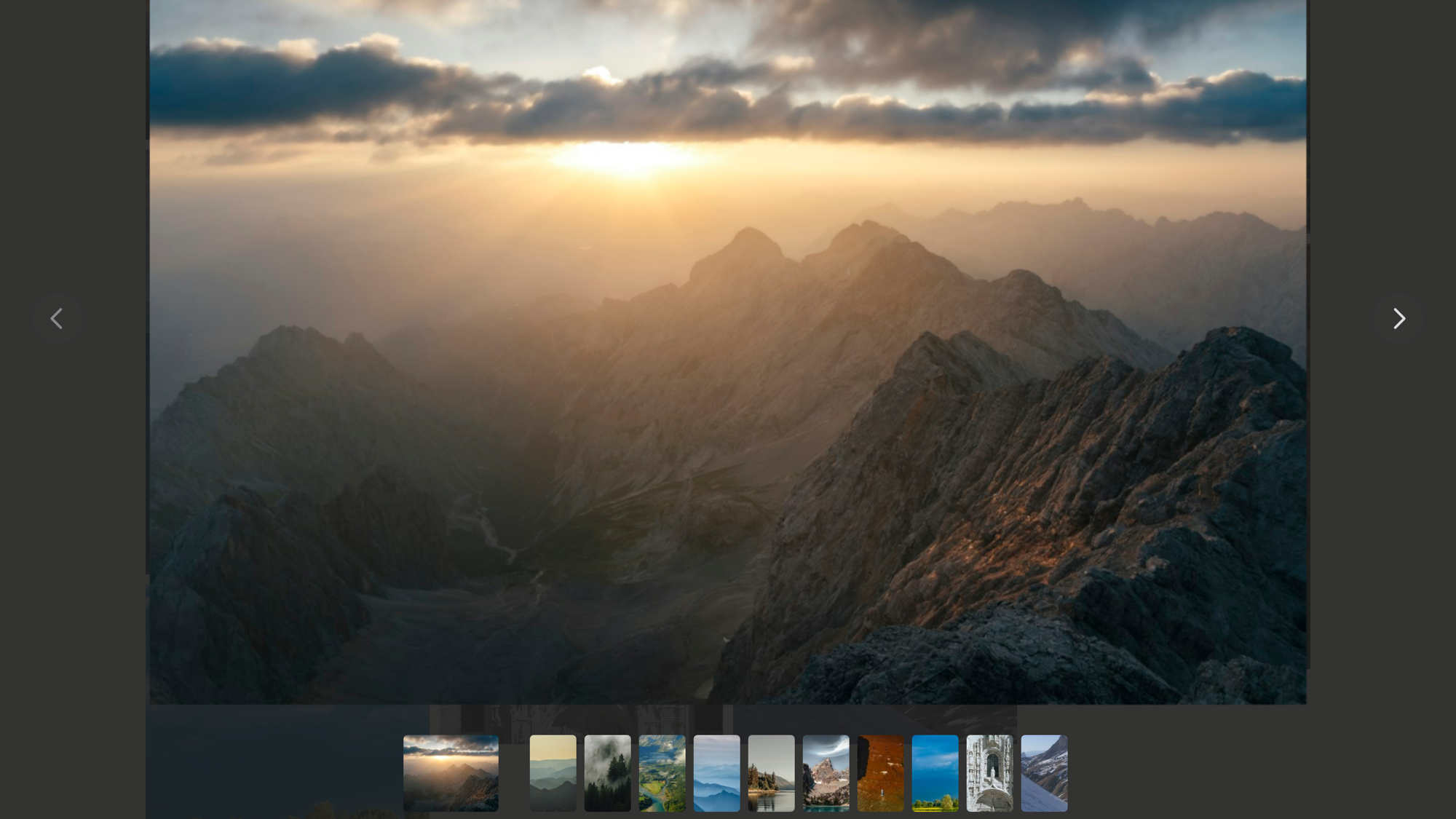
Every Modula grid scrolls sideways once a photo is open: in the lightbox, visitors move on with the arrows, a swipe, the arrow keys or the mouse wheel.
With Modula Pro, the Lightbox section adds Show thumbnail strip, a row of thumbnails that Position places left, bottom or right (Bottom by default).
Enable slideshow and its Autoplay switch play the photos one after another (help article). The Lightbox section doesn’t appear for Slider, Story and Video gallery.
How to make a vertical scrolling gallery
A vertical scrolling gallery grows downward: people keep scrolling, and the gallery keeps giving them photos. Modula gives you three ways to build one: a grid with infinite scroll, Parallax and Story.
Add infinite scroll to a grid
An infinite scroll gallery shows the first batch of photos and loads the next as visitors reach the end. Nobody clicks a page number, and the page doesn’t load 300 photos up front.
- Switch on the Pagination extension in Modula → Extensions.
- In Layout, set Type to Masonry, Uniform grid or Justified grid. Skip Tiles: the editor hides the Infinite scroll switch for it.
- Switch on Pagination and open Page size & navigation.
- Set Images per page, say 24 on desktop and 12 on phones. At 0 there’s no limit, and every photo loads at once.
- Keep Infinite scroll on. It turns on with Pagination.
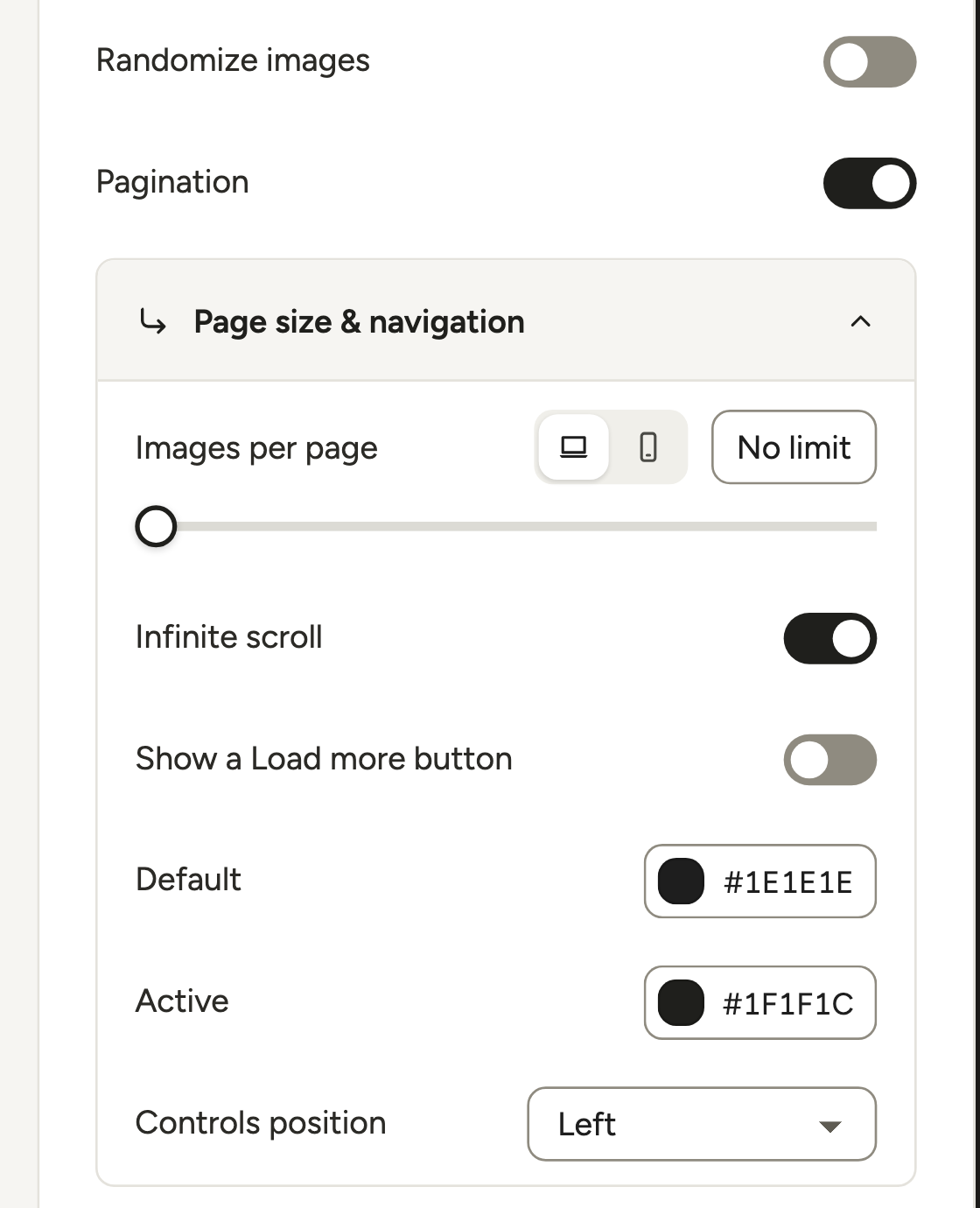
Pagination comes with the Business plan and doesn’t work with Freeform, Template, Slider, Showcase, Story, Parallax, BnB or Video gallery. The pagination help article lists every option.
Infinite scroll or Load more?
Use infinite scroll when people browse, and a Load more button when they’re looking for something.
Nielsen Norman Group found that infinite scrolling “works best for situations where users will want to scroll through homogeneous items with no particular task or goal in mind” (NN/g, 2022).
Wedding guests flicking through the reception photos are browsing. The couple hunting for the one shot of grandma dancing is searching, and endless loading gets in their way. It also hides your footer and any booking link in it.
For a middle ground, switch on Show a Load more button in the same panel instead of Infinite scroll. More photos then appear only when someone asks.
With the Parallax type
Set Type to Parallax and pick a Scroll effect: Calm, Balanced (the default) or Dynamic. You can also put a caption over the photos. Calm suits most portfolios; Dynamic gets busy fast. Parallax has no pagination, so keep the set short.
With the Story type
Story is the immersive option: full-screen vertical stories that visitors tap through. Set Type to Story and decide on Loop stories. It’s off by default; turn it on and the story starts over after the last photo, like Instagram.
Animate photos as they scroll in
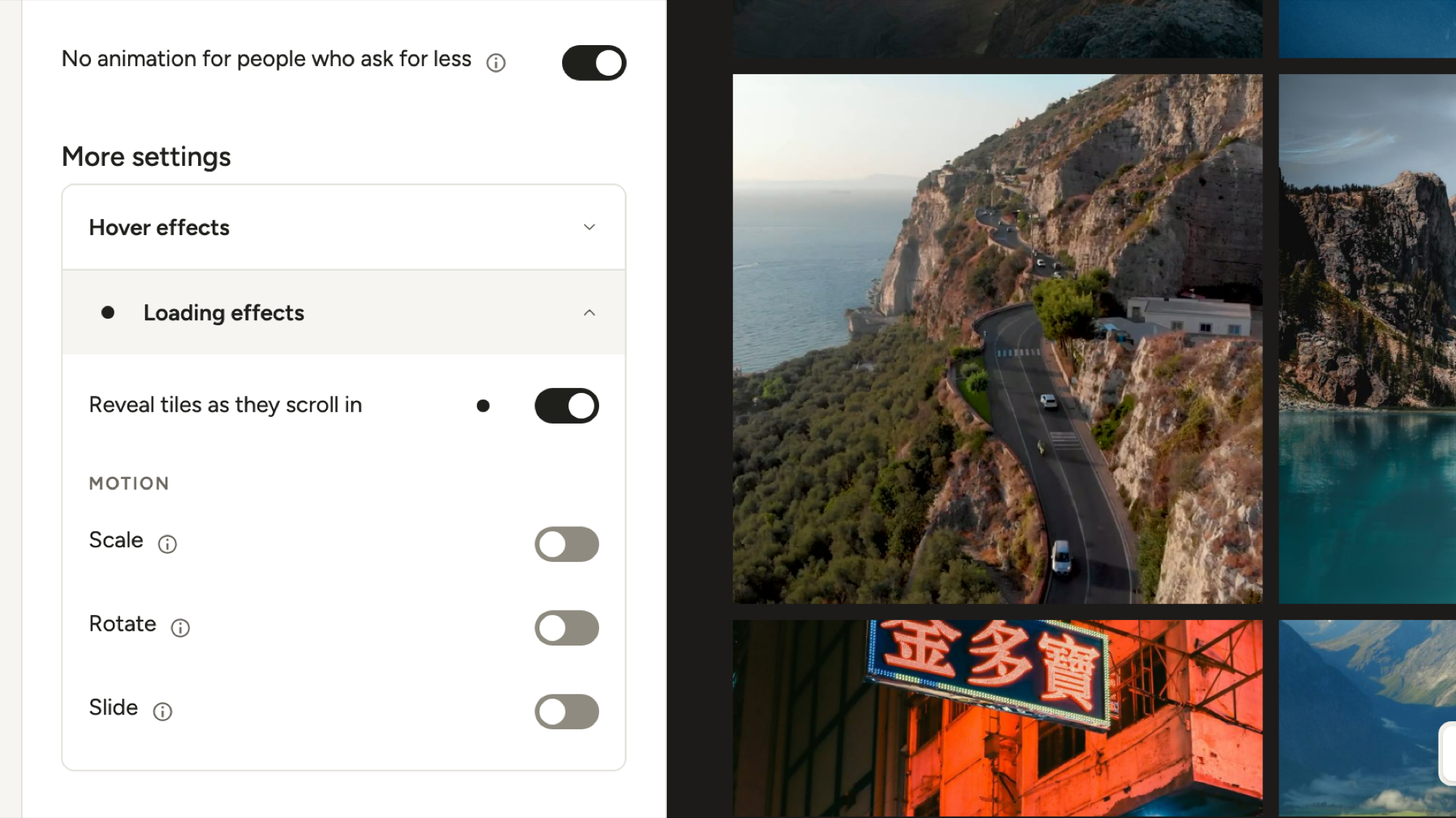
Under Motion, pick an Entrance preset, such as Rise, Develop or Sweep, to choose how photos appear, and set its Speed (Slow, Normal or Fast). Every entrance is free. On a long grid, keep it gentle. Our animated galleries guide shows each option.
Tips for a scrolling gallery people actually use
A scrolling gallery works best when it shows there’s more, keeps its controls in view and stays short. These tips come from Nielsen Norman Group’s carousel research.
- Let the next photo peek in. NN/g recommends showing a sliver of the next frame. Peek side slides does that, and Showcase does it on its own.
- Keep the arrows visible on desktop. It’s long-standing NN/g guidance: “Users on desktop websites have not embraced horizontal scrolling” (NN/g). Leave Show arrows on.
- Keep a slider to about five frames. Twelve mugs, three at a time, is four frames. For 50 photos, use a grid with infinite scroll.
- Don’t count on dots. NN/g calls them “a particularly poor cue on mobile devices.” Peeking photos or thumbnails say more.
Keep a scrolling gallery fast
Images make up the biggest share of a typical page’s weight: the median home page loads 1,059 KB of them on desktop and 911 KB on mobile (HTTP Archive, Web Almanac 2025). A scrolling gallery is mostly images, so keep them light:
- Load images as people scroll. Modula loads each photo just before it comes into view (lazy loading). It’s on by default, sliders included.
- Pick the right file size. Image file size in Layout decides which copy of each photo loads. A 24-megapixel camera file is 6,000 pixels wide; a slider 1,200 pixels wide never needs all that. Medium or Large is plenty for most grids.
- Compress and use a CDN. A CDN serves each photo from a server near the visitor. The Trio and Business plans add both. See the speed help article and our guide to faster gallery images.
Add the gallery to a page
To put a Modula gallery on a page, click Embed in the editor’s top bar and copy the shortcode, which looks like [modula id="89"].
Paste it into any page or post, or add the Modula Gallery block and pick your gallery. There’s also an Elementor widget and modules for Divi and Beaver Builder.
Preview the page on a real phone before you publish; our mobile gallery guide has the settings to adjust. Later edits show up by themselves, with no new shortcode.
Pick the style that matches what your visitors do: flick through favorites, browse a big set or sit back for a story. You can change Type later, and your photos and captions stay put.
Frequently asked questions
In a Slider, visitors swipe, drag with the mouse, or click the arrows, dots or thumbnails. In a grid, they scroll down the page; once a photo is open in the lightbox, they move on with the arrows, a swipe, the arrow keys or the mouse wheel.
Yes. Slider and Showcase have Autoplay, and the lightbox slideshow in Modula Pro plays photos in turn. What Modula doesn’t do is a nonstop marquee: autoplay always pauses at least a second between steps. If most visitors use phones, leave Autoplay off.
Immersive scrolling fills the screen and carries visitors along, one photo at a time. In Modula, that’s the Story type: full-screen vertical stories with progress bars that visitors tap through. Parallax is a lighter take, with columns that drift at different speeds as you scroll.
No. With a gallery plugin such as Modula, you pick a Type and switch settings on; the plugin handles swiping, lazy loading, the lightbox and phone layouts. HTML, CSS and JavaScript tutorials are for building a gallery from scratch, and you’d maintain that code yourself.
Partly. Modula Lite gives you eight layouts, lazy loading, a lightbox visitors can swipe or wheel through, and a simple reveal as photos scroll in. The rest needs Modula Pro: Showcase, Parallax and Story on any plan, Slider from Trio, and infinite scroll on Business.
Not with a gallery plugin. Websites that scroll sideways, like those in “horizontal scroll website” lists, get the effect from the theme, a page builder or custom code. Modula scrolls the gallery, not the page, so a sideways slider sits on an ordinary page that scrolls down.