 Made in Europe, buy from Europe.
If your Modula watermark is not applied to your images, go through the checks below in order. Modula Watermark adds the watermark to the image files on your site when you click Watermark images.
Make sure the watermark was applied
Turning the watermark on isn’t enough. The images get the watermark only when you apply it. Images you add later need another click.
- Go to Modula → Galleries and open your gallery.
- Click Protect in the left rail.
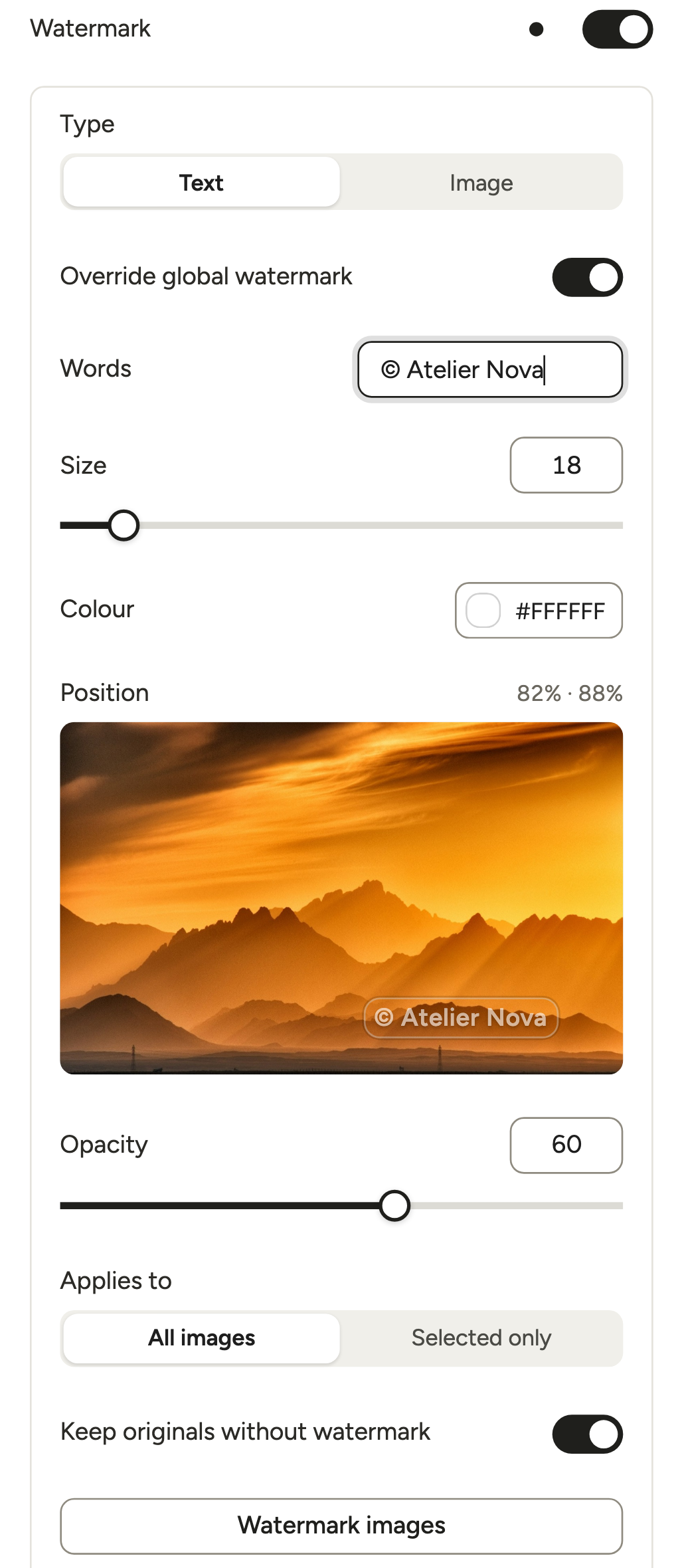
- Switch on Watermark. The gallery uses the watermark set in Modula → Settings → Protection → Watermark (see Modula Watermark).
- To use another watermark for this gallery, switch on Override global watermark. Then choose the Type: Text with your Words, or an Image.
- Leave Keep originals without watermark on. Without the originals, Modula can’t remove the watermark later or apply a changed one.
-
Click Watermark images. Wait until Modula reports how many images it watermarked.
Note: Modula may report skipped images, or say an image was watermarked without a backup. Modula then no longer has the original of those images. Upload the original files again and apply the watermark to them.
Clear the caches
Your images may have the watermark while the page still shows them without it. In that case, a cache is serving the old files. A cache is a saved copy of your files that loads faster.
Clear the cache of your caching plugin or host. Then reload the page while holding Shift, so the browser loads the images again.
If you use Modula Speed Up
Modula Speed Up serves your images from Modula’s CDN, which keeps a copy of each one. A CDN is a network of servers that delivers your images.
When you apply a changed watermark again, the file keeps its name. So the CDN can go on showing its older copy. Changing the compression level makes the CDN fetch the files again.
- Go to Modula → Settings → Performance.
- Pick another Compression level, for example Lossy instead of Lossless.
-
Click Save changes.
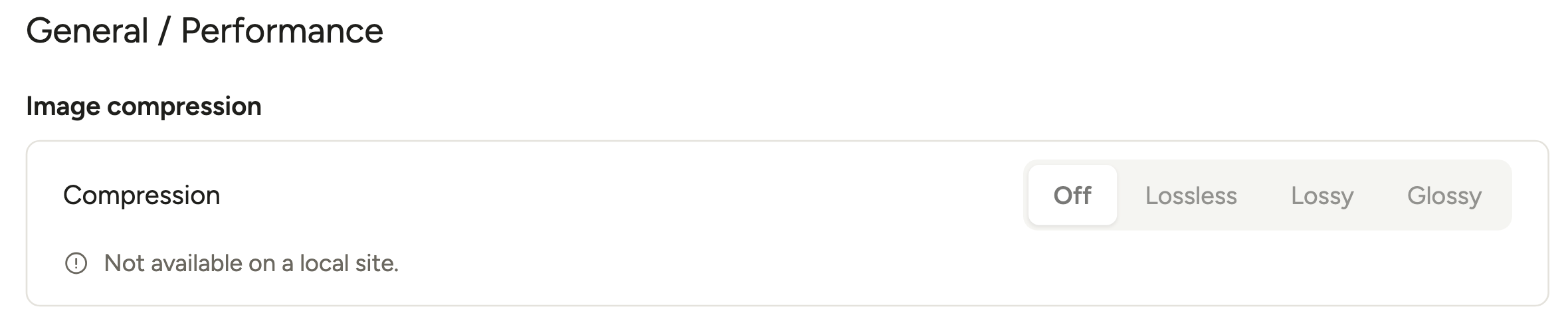
- A gallery can have its own levels. To check, open the gallery and click Layout. Then open Speed Up under More settings. If Thumbnail compression or Lightbox compression is not Site default, change it there instead.
- Open the page with the gallery and reload it. The images now come from the CDN with the watermark.
Keep the new level. Going back to the old one can bring back the copies the CDN saved before. Speed Up doesn’t work on a local site, so this applies only to a live site.
Check the server
If the watermark is still missing, the cause may be your server. Two things can get in the way.
Image library
Modula needs the GD or Imagick PHP extension to write the watermarked files. These extensions are server tools that edit images.
If you see “Could not create the watermarked image”, go to Tools → Site Health → Info → Media Handling. There you can see which extension your server has.
Ask your host to enable Imagick, or GD with WebP support for WebP images.
PHP time limit
Modula watermarks one image at a time. A very large image on a slow server can still run out of time and stay without a watermark.
- Go to Tools → Site Health → Info.
-
Open Server and look at PHP time limit.
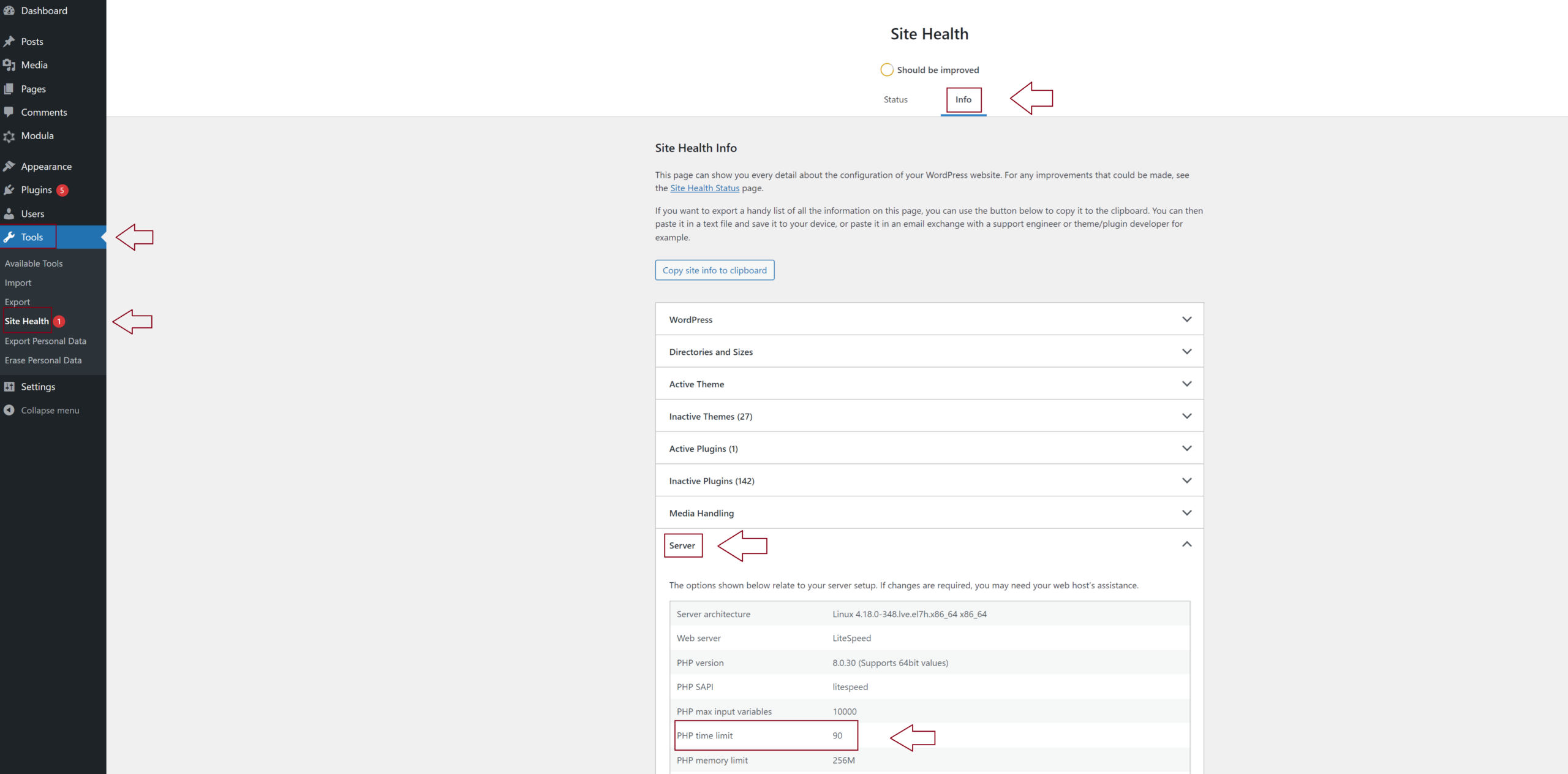
- If it is low, raise
max_execution_time. We recommend 360 seconds. Your host can do it for you, or follow How to Increase Maximum Execution Time for WordPress.
If you still see no watermark, contact our support team.